
Outdoor Recreation Sector All-Candidates Meeting 2026
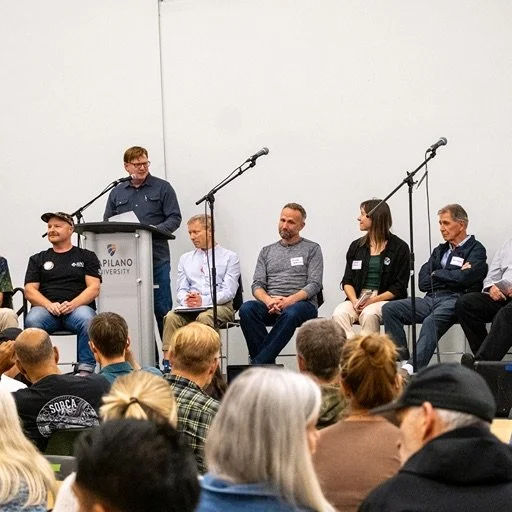
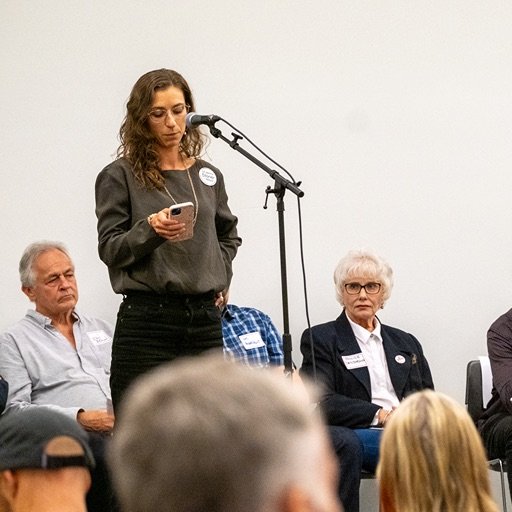
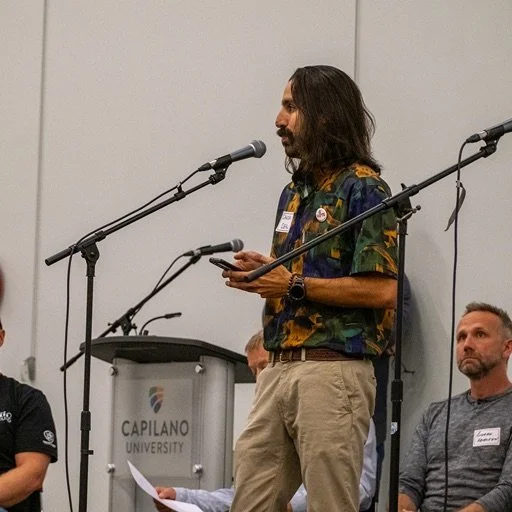
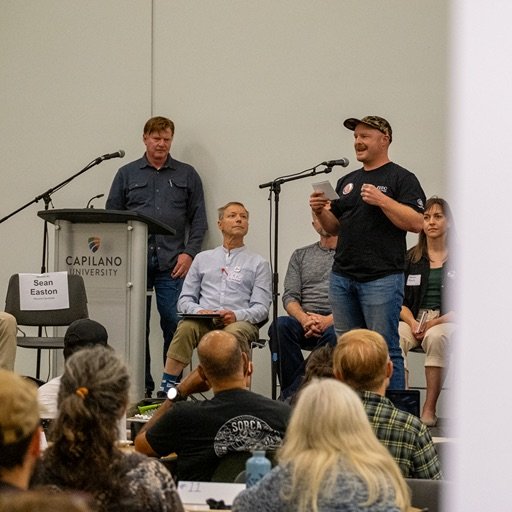
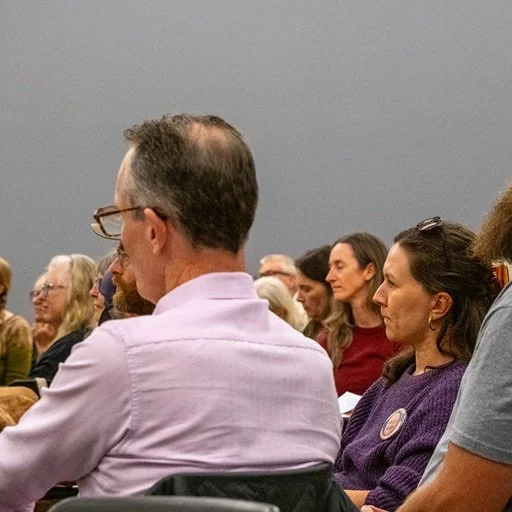
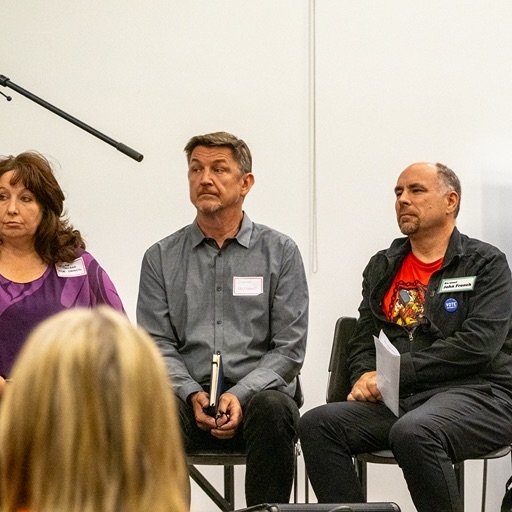
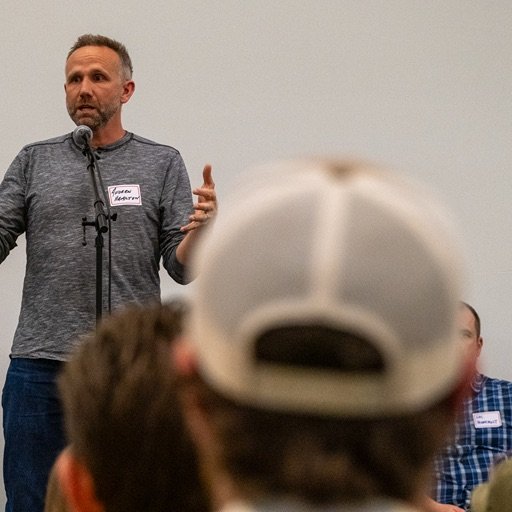
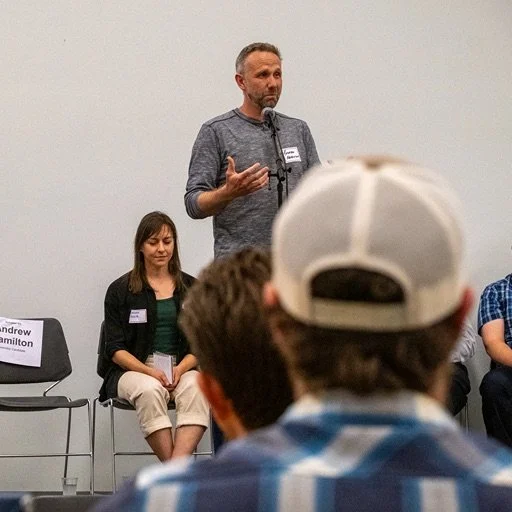
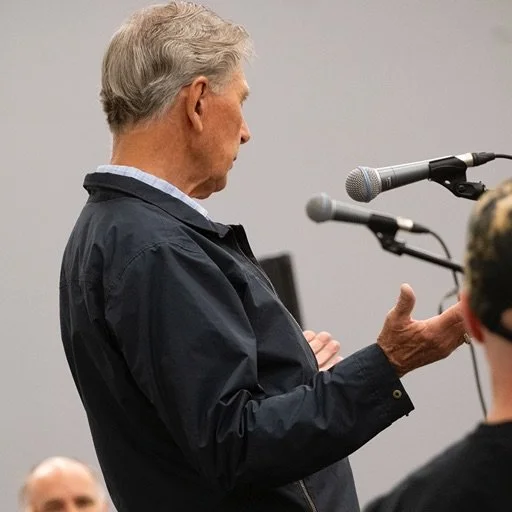
The Outdoor Recreation Sector All-Candidates Meeting brought together local mayoral and council candidates to discuss the future of trails, access, and recreation policy in Squamish. Hosted by SORCA and facilitated by Jeff Cooke, the event gave candidates a chance to outline their priorities regarding stewardship, infrastructure, tourism balance, and municipal support for outdoor recreation groups.
Part one of the evening featured timed opening statements from each candidate addressing the following prompt:
"Where does support for outdoor recreation fit within your policy priorities? And what specific steps or actions have you taken or will you take to demonstrate that support over the next two years?"
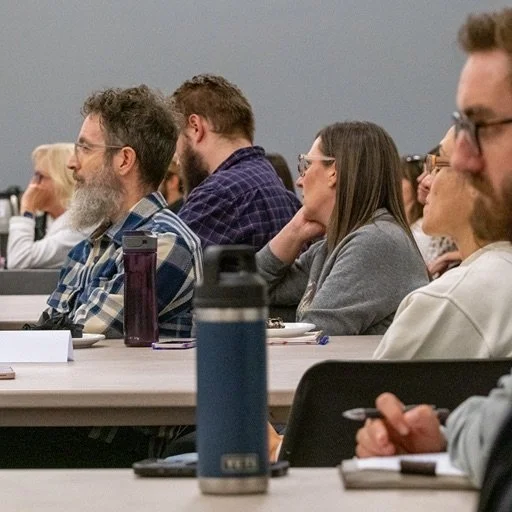
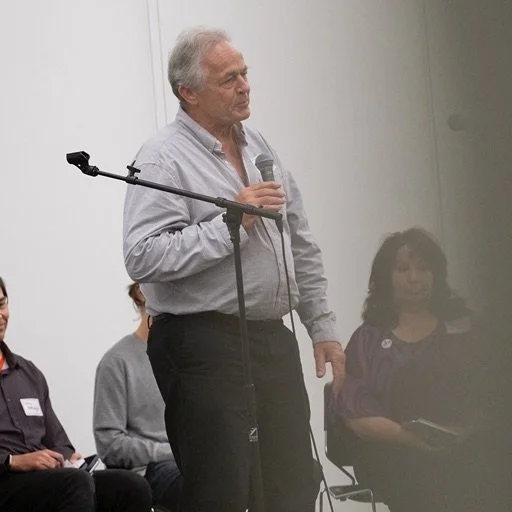
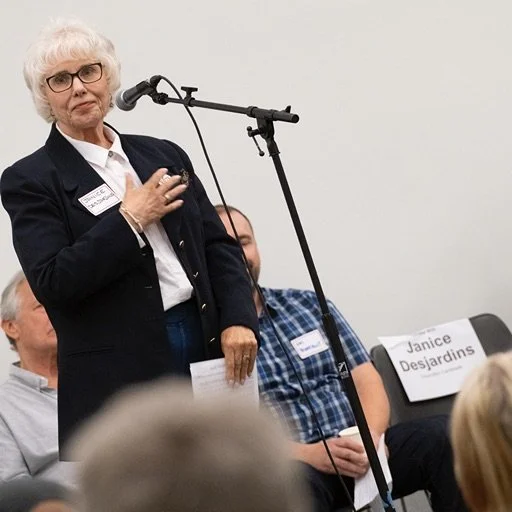
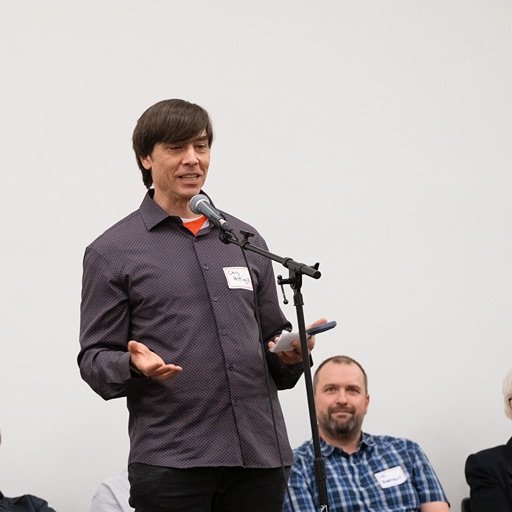
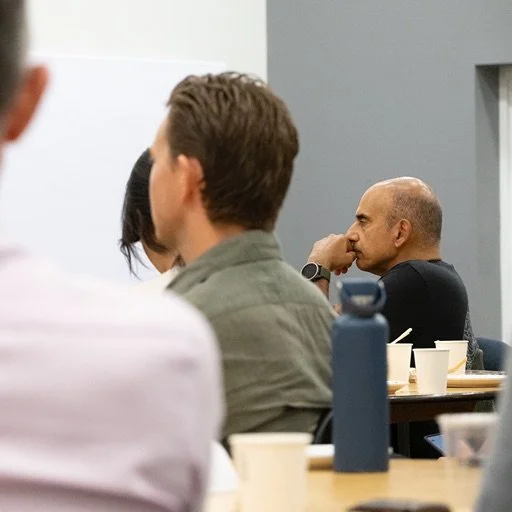
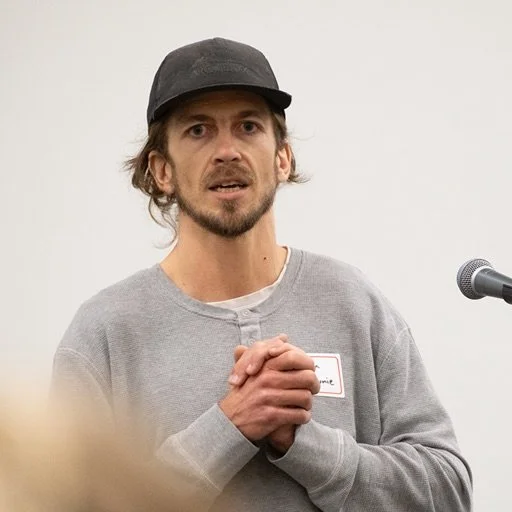
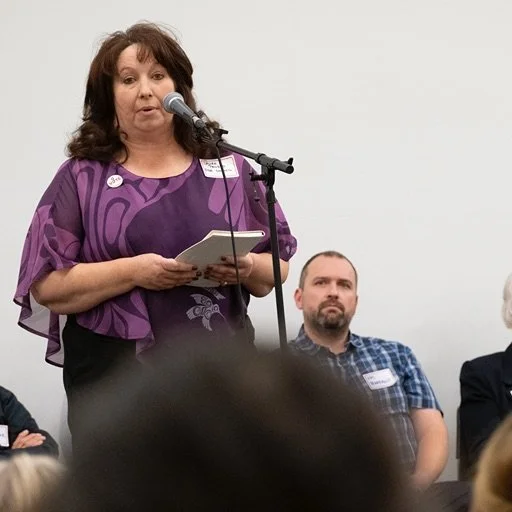
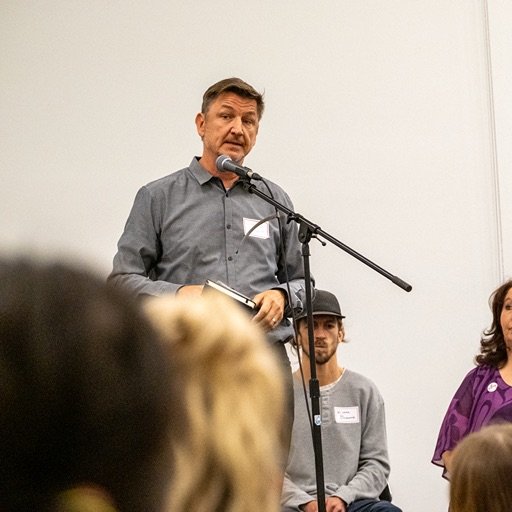
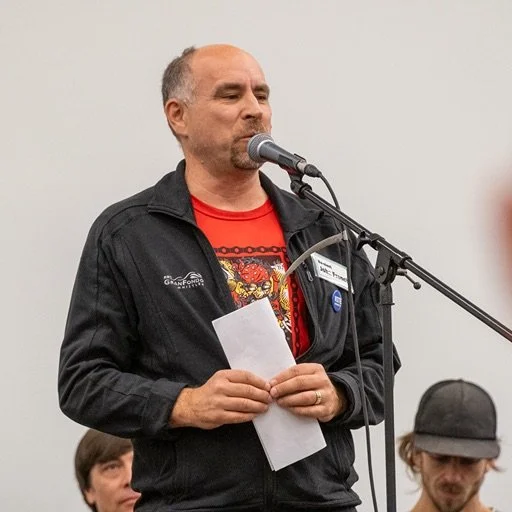
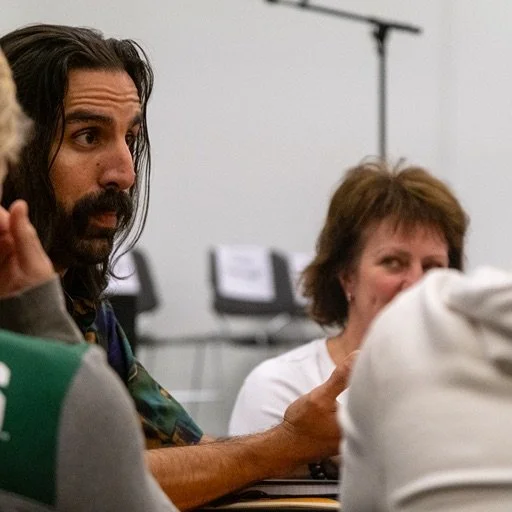
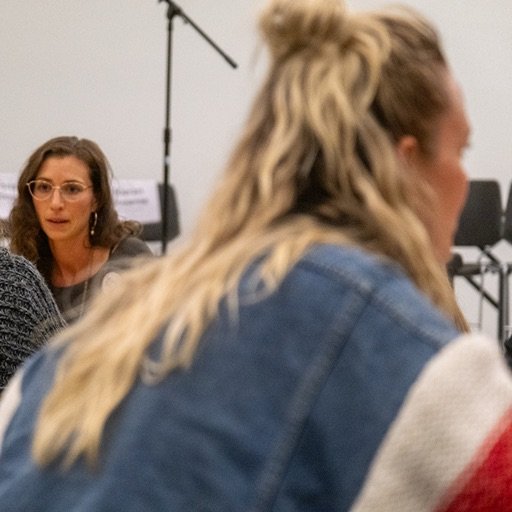
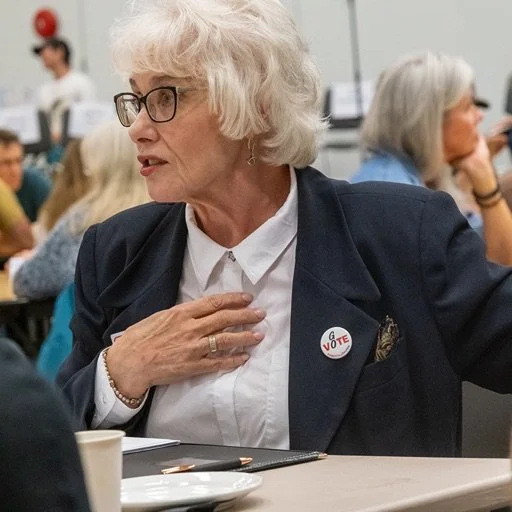
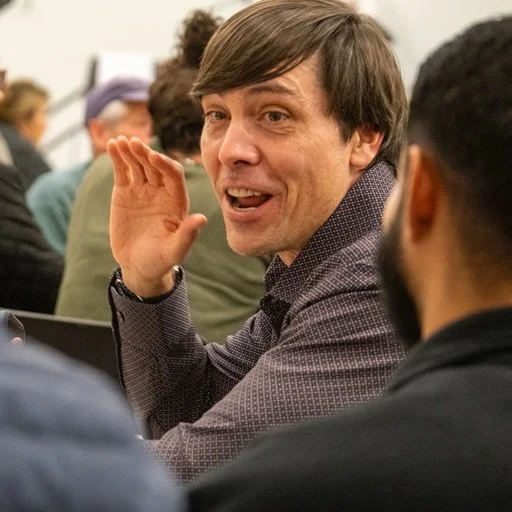
A huge thank you to everyone who made this evening possible: all the mayoral and council candidates for your time, openness, and thoughtful participation, everyone who attended and engaged in the conversations, Capilano University Squamish for hosting us in the space, Routes Eatery for keeping us fuelled, Squamish Arts Council for your continued community support, Sora and Kai for running the sound and audio setup, Jeff Cooke for keeping the evening running smoothly as our MC and facilitator, and Scott Yan for documenting the evening.
-
00:00:00.000 --> 00:04:09.000
Brennan Williams:
Good evening, everyone. Welcome to the Outdoor Recreation All-Candidates meeting. My name is Brennan. I'm the president of SORCA, and I'd like to thank everyone in the room and the candidates for coming out tonight and being engaged. It means a lot to the volunteers who put this event together, and I know a lot of you had other places to be this Squamish evening.
Before we get to the candidates, I want to take a couple of minutes to say why we think this conversation matters. I'll start with a confession. When I first started working with SORCA six years ago, I was blissfully unaware of how much politics was involved in riding my bike. I was thinking about the next corner or whether I remembered snacks. And I bet that's true for most of you. Whether you're on a wall, river, trail, or a horse, there's a big reason why we do what we do.
But here's the thing, politics and outdoor recreation are inseparable. Politics decides whether there's parking at the trailhead and whether that trail is still there in 10 years. It decides whether the people who work in this town can afford to live in it, and who pays to fix the bridge and empty the garbage cans. We may not think about politics when we're recreating, but it shapes every one of our days out.
Everything we do starts with the land. Every trail, crag, and river we enjoy is on the territory of the Squamish Nation on Skwxwú7mesh Úxwumixw sacred lands. Land that colonization has done its best to take from the Squamish nation, the effects of which are still felt and seen today. Recreating on this land is a political act. It always has been and always will be, whether or not we think about it. We can't separate our outdoor pursuits from the history of the land that we recreate on.
Recognizing this, it's important that we all do our best to recreate in a good way. Some questions to ask ourselves are, have we listened? Have we asked? Are we supporting the nation's rights and authorities on their lands? It's all about relations. Every one of us has a part to play in reconciliation, and those who hold office carry an even bigger one. Let's take a moment to reflect on these questions in acknowledgment and gratitude that were gathered here tonight on Squamish Nation territory.
Now, Outdoor Recreation is one of the best things about this town. In a six-month survey period alone, mountain bike visitors spent $26 million here, which grows to $44 million once you count the wider provincial economic impact. That's before counting what residents themselves spend on the sport, which likely exceeds what visitors spend. Climbing brought in another $42 million for the province. That's real jobs, real businesses, and real tax dollars.
But the biggest value isn't money, it's why people live here. Four and five local riders said the trails were part of why they moved to Squamish, and three and five local climbers said the same about climbing. For a lot of us, this isn't just a nice place to play. It's the reason we chose this town and the reason we stay. Nearly every rider we surveyed said that biking makes them healthier in body and in mind. Nobody here needs convincing.
But success has a cost. Ridership here has doubled in less than a decade and it's getting crowded. The people doing the work building trails, running parking and washrooms, and looking after the land are mostly volunteers. Many of the groups here tonight are stretched thin and they're being asked to do more every year. The province has noticed too, and its new outdoor recreation strategy names rising costs and heavier visitation as real problems.
Now, the clubs here tonight represent roughly 5,000 members in Squamish. And that's before counting everyone who paddles, rides, hikes, and runs without a membership. The total number of ballots cast in the last municipal election was only 6,718. The mayor was elected with less than 4,500 votes. I'm not saying this to be dramatic. I'm saying it because this is a big engaged community and we're paying attention. So do our candidates. Thank you for being here.
Whatever you want to do at the council table, it will land on a trail, a river, a crag, or a trailhead in this valley on Squam. Tonight, we're not looking for slogans. We'd like to hear what you'll actually do to support the outdoor recreation in this beautiful town. To get down to business, I'd like to introduce our facilitator for tonight's event, Jeff Cooke.
00:04:18.000 --> 00:06:31.000
Jeff Cooke:
Thanks for being here, everyone. And Brennan, thanks for your very poignant remarks. As Brennan mentioned, I will be the facilitator this evening. We have a lot of candidates and a lot of very interested voters in the room. So my role is to keep the process moving smoothly and fairly so we can promote the best exchange of information.
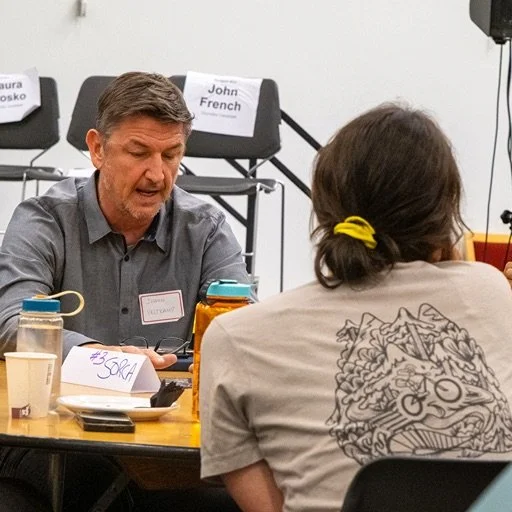
So we have roughly two and a half hours ahead of us. This time will be split into two parts. The first part will be to give each candidate three and a half minutes to introduce themselves and to answer a question that was provided to them earlier. This should take about 70 minutes. In part two, the 15 candidates will rotate through each of the 15 tables. And each candidate will have four minutes at each table to answer questions and have a conversation. More specifics on that will follow after part one.
So let's get started with part one. The question that we have asked everyone. I thought it might be up on a screen, but we don't have a screen, so I'll read it to you. The question that we provided earlier is, “where does support for outdoor recreation fit within your policy priorities? And what specific steps or actions have you taken or will you take to demonstrate that support over the next two years?”
For your information too, we used a randomizer to organize the order of the candidates and how they're speaking. That's all up to chance if you're first or last, except for the mayoral candidates were in first and then all the council candidates. I ask that all the candidates respect the time limit that we have out of respect for the audience members and also your fellow candidates. Ian is prepared with a very loud cowbell to indicate the end of your allocated time. There'll also be a very, much lighter ding at the 30 seconds left mark. So without further ado, we will get started with Jenna Stoner.
00:06:40.000 --> 00:09:22.000
Jenna Stoner:
I can sit with the microphone. That's okay, I'll stand. Can folks hear me okay? Great. All right, good evening, everybody. Thanks so much for being here this evening and spending some time with us. My name is Jenna Stoner. I grew up, I was born here in Squamish, grew up in the Sea to Sky corridor, yo-yoing. My dad lived in Whistler, my mom lived in Vancouver, and it's been so special to call this place home. In 2014, my husband and I decided to move here and put down deep roots because like many of us, we love this place and all the outdoor recreation opportunities that it provides for us.
I have had the pleasure of serving on council for the past eight years. And with that, I have learned deeply how our systems work, where they're working well, where they are not working well. And I put my name forward for mayor because I think I have the skills and experience to address some of the challenges that are before us in our community. and look forward to guiding Council in our community and addressing those going forward.
To the question that has been presented to us this evening. Outdoor recreation is a fundamental part of who we are as a community. It's a key part of our quality of life. It's the reason why so many of us have chosen to live here. And it's an integral part of our economy. Whether you're a mountain biker, a paddler, a climber, a dirt biker. The beauty, or simply an artist that loves the beauty of this natural place. Outdoor Recreation is a key part of what defines us.
Some of the things that we have done while I've been on Council that I've been proud of in supporting Outdoor Recreation has included long-standing support for SORCA through a partnership agreement that supports their core operational costs. Developing a community agreement program and policy, so to provide greater transparency and understanding for how nonprofits can also work with the district through partnership agreement. We supported providing land and financing for search and rescue for their new SAR base at the airport. As well, we've recognized Outdoor Recreation as a core part of our Economic Development Plan, and as of 2027, we'll be deliberating a motion that I put forward that looks at investing more garbage cans and public washrooms in our public spaces.
Work in this space isn't done in isolation. It is only as strong as the relationships between partners that make Outdoor Recreation work for residents and for visitors alike. To me, that is the work that needs to be done going forward, continuing to build on strong relationships with working with recreation groups, the regional district, tourism, the chamber, landowners, the province, and most critically, the Squamish Nation, so that the needs and the opportunities of the outdoor recreation sector can be realized in a way that stewards the environment. Our connection to place and to our people. Thanks.
00:09:24.000 --> 00:09:29.000
Jeff Cooke:
Thank you. Next up, Daniel.
00:09:37.000 --> 00:12:20.000
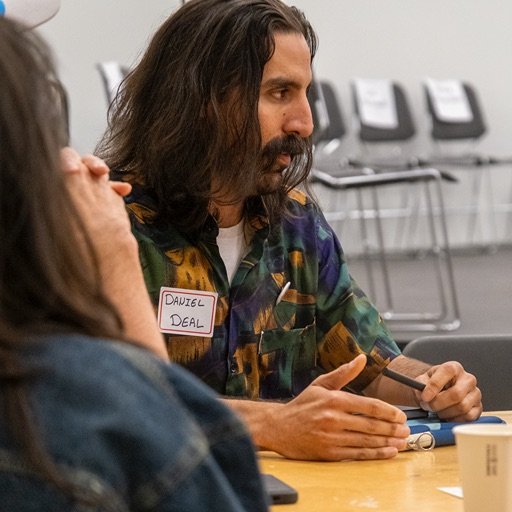
Daniel Deal:
Hello, everyone. My name is Daniel Deal, for those of you that don't know me. I came to Squamish about 6, 7 years ago. I came here, fell into Squamish by mistake, and never left. I fell in love with these beautiful mountains. Actually, my first place I lived was at one of these Quest University rooms just behind us here. And the outlook that I had was this beautiful scenery behind us and immediately fell in love and knew that this is the place that I want to be. and where I'm probably gonna live for the rest of my life.
Yeah, as an outsider of Squamish, started off as one, I learned very quickly that the community here is very welcoming. I joined a softball league. Fell in love, still play today. And immediately knew that the community is what builds Squamish. I unfortunately don't bike ride. I don't take any trails, but I love hiking. Some of the hikes that I love is the Slhanay hike. I do that hike at least once a week. I feel like you get to the top and it becomes a pick your own adventure. Every time I'm out there on one of those hikes, I'm picking up trash. I, you know, come back with two pockets full of trash. And this is a way that I kind of give back to the community because. I want to leave it better than I found it. These things as small, as you know, finding something that doesn't belong on the trail and removing it. It pays it forward to the next person that's on that trail.
So I don't have extreme amounts of funds to donate to excellent societies like SORCA or other trail building societies. However, I put forth my efforts in cleaning them up and doing the most that I can. I do agree that we do need more public facilities at some of these at some of these trailheads, at some of these climbing routes at some of the bike trails. We need proper parking, we need proper facilities, as in trash, washrooms, and things like this, so people aren't doing it on the trails, because I think we've all been on a hike where we've seen. Things on a trail that shouldn't be there that unfortunately I'm not picking up.
I believe that creating an environment where employers can grow, that can also bring in more people that want to enjoy this town. And with that comes more growth, better people, and overall really happy town. I fell in love with this town, and I'm sure that there's going to be multiple people that also fall in love with this town. We just have to take care of the environment and the trails that are around it. That's all I got. Thank you.
00:12:25.000 --> 00:12:27.000
Jeff Cooke:
All right, Sean Easton.
00:12:36.000 --> 00:16:26.000
Sean Easton:
Hey, everyone. My name is Sean Easton. I'm really excited to come here tonight to talk with all of you because I've been working in Outdoor Recreation for the last 20 years. I went to school at Thompson Rivers University and studied in their adventure guide diploma. I am a whitewater raft guide, outdoor educator. I came to Squamish as a guide 15 years ago, and I ended up staying here because of the community, because of the people, and, as everyone said, you know, you come for the nature, but you get stuck here.
I am a lifelong snowboarder. I became a mountain biker when I came here. I'm a SORCA member. I presented at the Outdoor Recreation Council of BC on about how to make a bigger impact by using the membership of your organizations. For the last 10 years, I've been working as executive director at Zero Ceiling Society of Canada. We're an outdoor access program that serves marginalized youth. Just today, I actually took a group of Howe Sound Secondary students for a hike up in Whistler. I went to the Train Wreck, did some graffiti. Tomorrow, I'm working with the Squamish Alternative School. We're going mountain biking at the park. So we provide free access to young people that deserve it, that live in our community that otherwise would not get out there.
I have worked for Outdoor Recreation for a long time. I've connected people to land for a long time. In introducing people to nature, you create stewards for nature. You know, I've created champions that have gone on to teach others. This is leadership that I've done, and that's what I want to bring to Squamish. Something really interesting about Zero Ceiling is we build the organization alongside the people that participate in it. And that's what I think Squamish needs. We need a town that is built for and by the people.
And I've chosen to run for mayor because I want to bring that leadership to Squamish. And what people have been telling me is their needs are not being met. As Jeff said, access to the trails have doubled in the last 10 years. But our resources haven't. What I've learned is Squamish has been built by people in the room like you and the Outdoor Access Societies that you work with. And what they've been telling me is their needs aren't being met. The district priorities are not aligning with community priorities. And the decisions being made don't meaningfully include the people sitting at these tables tonight.
I chose to run for mayor to better meet the needs of the people in this town. You know, I want to thank SORCA for hosting tonight, but also the Squamish Access Society, the Squamish Trail Society, the Dirt Bike Association, and many more that have helped to create the Squamish that we love. So much of what we experience has been built by community. We need a district that works with community again to build what we need. And what people are telling me is it's actually getting harder. They're contributing time and expertise, but they're not getting any return. Powered by volunteers, but it's getting more challenging to collaborate with the district.
As mayor, commit to three things. Becoming a better partner. Protecting access to recreational lands. And ensuring that we protect the health and environmental benefit of the town. You can count on me to align our resources to effectively meet our shared priorities of maintaining and improving access to recreational assets. We'll make sure development protects access to our lands. And any industry that works in our town needs to ensure that they're protecting the health of the people and the environment. That's why I'm running for mayor. Looking forward to getting outside with you and working with you.
00:16:32.000 --> 00:16:38.000
Jeff Cooke:
Thanks, Sean. Now on to the council candidates, Eric Andersen.
00:16:39.000 --> 00:16:43.000
Eric Andersen:
Jeff Cooke, are you sure I can't use that desk of yours?
00:16:43.000 --> 00:16:45.000
Jeff Cooke:
You may, if you like.
00:16:45.000 --> 00:20:27.000
Eric Andersen:
A capital C, capital C, complete community anywhere includes access, land use planning, facilities and programs for outdoor recreation for all ages. For Squamish, Outdoor Recreation is important for our economy. Tourism and overnight stays, restaurants, clothing and equipment retail. and for how we attract people from elsewhere and keep people who can be important contributors to our community and local economy. That's all obvious.
My past contributions and positions? Paddling access. When I returned to Squamish 20 years ago, I co-founded the Water Trail Action Group with John French and others. There's still lots of unfinished business regarding paddling access. I authored a chapter of the 2011 Trails Master Plan, which needs updating now, but I would instead prioritize a Parks and Recreation Master Plan update. I was very much involved in the 2011 plan input. I've tried, unsuccessfully, to convince my council colleagues since 2023 to approve funding for the staff-recommended update to this plan.
I've been a longtime neighbour and advocate for Smoke Bluffs Park. Safer highway re-entry from Murrin Park, an issue the Climbers Access Society and lake users have brought to my attention. I finally got to include this in a briefing to the minister last year. I've advocated for recreation, specifically wind sports and trails and tourism, to be given back their seats at the table at the Squamish Estuary Management Committee, which the district, unfortunately, as chair, declines to reconvene. So all of these past efforts have been unsuccessful. Or they are incomplete. But I'm stubborn.
Future actions. Of course, a Parks and Recreation Master Plan update should be approved in the upcoming budget. No more delay. But it should have a comprehensive scope to include, as the last version did, facilities and programs not operated by the district. We need a new comprehensive roadmap so that we can plan and prioritize investments and be ready for funding contributions. There's a lot at stake for Water Recreation in the 2018 Marine Action Strategy for which we have had no implementation update since 2019. A proposed marine impact study should go ahead and recreation would be accounted for. But it's no replacement for an action plan. Should I mention the boat launch issue? The proposed sailing centre has for some time had some log jams needing to be sorted. We need campgrounds. We must continue to press the province to invest in Crown land campground facilities.
Non-profit, volunteer-based recreation groups need security. Security in the form of multi-year program funding, and secure leases and tenures, so that they can invest volunteer time and private money. One of our council's strategic plan items, it's number 1.4, says, build relationships with community groups to increase community capacity and resources. That needs to continue through the next term of the next council, I hope, and be a strong emphasis.
So finally, dialogue and collaboration with the Squamish Nation, Squamish Valley operations is important for outdoor recreation and managing its pressures on Squamish Nation lands, which include virtually all of our riverbanks from here all the way up to Pilchuck Creek. So there are trespass and safety issues to sort out and resolve together. SORCA and the Squamish Access Society have led the way with their memorandums of understanding with the Squamish Nation, youth programs and or co-management initiatives. Thank you.
00:20:29.000 --> 00:20:35.000
Jeff Cooke:
Then next up, Andrew Hamilton.
00:20:39.000 --> 00:23:11.000
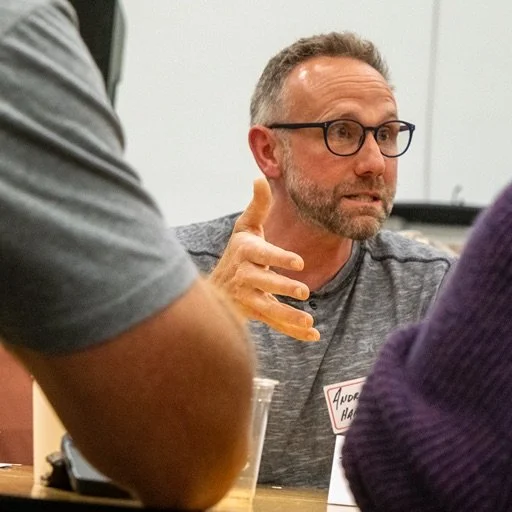
Andrew Hamilton:
And I'm guessing our seating was randomized in the same as the random order. There we go. I was wondering, am I next? Am I next? I'm Andrew Hamilton. I've spent the last four years sitting on council. I came to Squamish in 2017 to work here on this campus as a physical science, as physics and physical science instructor.
Well, I came here for this work. I was well aware of what Squamish had to offer me and my family in terms of outdoor recreation. And we use it. I can't say all of it. But mountain bike, trail running, and skiing would probably be our niche.
But that's not actually what the question is. The question isn't for me to demonstrate my trail cred. It's “where do I fit trails in my list of priorities in council work?” It's not at the top. Because in order to enjoy the trail. You need to have a place to live. In order to pay for the bike. Or the climbing gear, or the sleds, or the whatever. You need to work. All of these things need to be balanced in order to give us the space to do the things we love to do.
And that's hard. It's hard to decide. Should there be more parking in this residential facility? Or should we allow more space for greenery or trails? And I am generally going to go in the direction, in terms of priority. I will put green space and trails above parking. That's gonna come at a cost to the other things we like to do, like drive our cars to the trailhead. And those are the difficult decisions we need to make on council.
And so my priorities; having a place to live. Having a meaningful place to work are higher priorities than having the trails and the green space. But having those trails and green space are a much higher priority than finding a place for me to park my car. Thanks.
00:23:16.000 --> 00:23:18.000
Jeff Cooke:
Sarah Ellis.
00:23:23.000 --> 00:26:51.000
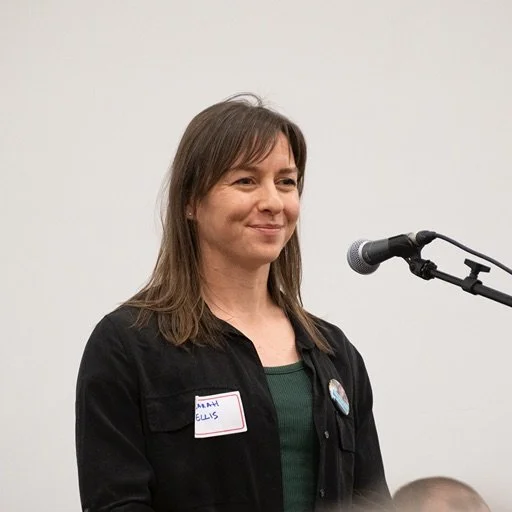
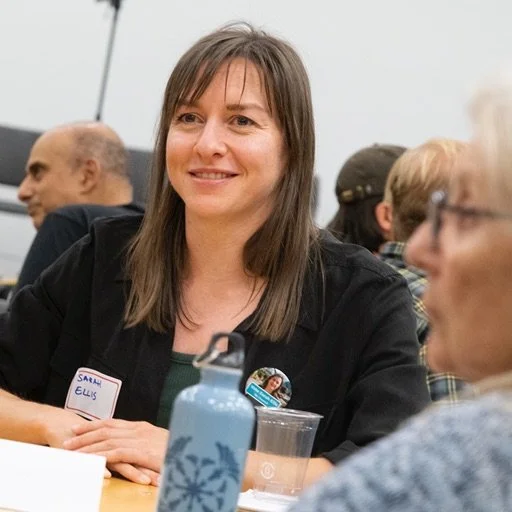
Sarah Ellis:
Hi, everyone. My name is Sarah Ellis. I moved here in 2020 as a climber and trail runner who wanted to be closer to the crags and trails that I love so much and had visited for years before from Vancouver. But what really made me stay here was the community, and especially the community builders, many of you in this room today, who are driven by this passion and creativity to build things that our whole community can love. And so I really appreciate you all being here today and engaging in this event.
I'm a professional urban planner by profession. I worked for eight years as a planner for the City of Vancouver. Right now, I'm the executive director of Squamish Community Housing Society, where for the last three and a half years, I've been working hard to bring affordable workforce housing to Squamish so that our whole community can stay diverse and thrive. I was also board president of our Squamish Placemaking Society for three years, working with great builders and community members to build beautiful public seating in Squamish's urban public spaces and bringing people together.
I'm running for council because I love Squamish. I love local government. I'm a huge local government nerd. But I also think it's really important that experience and skills and knowledge are represented at the council table. Our community is in transition. We are at a critical time facing pressures from growth, also at a time when municipalities are being asked to do more with less, as we're hearing from our Outdoor Rec community as well. I think it's really important to keep our eye on the prize, to keep getting all of the great things that come from growth without losing the heart that has built our community and bringing people along.
I think Outdoor Recreation is such an amazing microcosm of so many of these issues. Outdoor Rec, our crags, our trails, our water access, our economic drivers, they've put Squamish on the map globally. People come here from all around the world to experience these things about our community. They're also incredible community builders, bringing friends together, communities together, building incredible community leaders like many of you here.
But we're also hearing about a lot of pressures. Tourism accommodation is extremely limited and causing a lot of stress for visitors. We are hearing about pressure on the trail network and crags from users and an increased usage. We're also hearing about affordability causing people to leave our community, including many of the people who are working in our Outdoor Recreation industries, as well as volunteers. We're also hearing about complicated access in a way that we've never experienced before.
So the question is, what will I prioritize in the next two years if I'm elected to council? Two years is a blip in municipal government, but there's a few things that I'd really like to see. I'd like to see a tourism master plan that prioritizes hotel and camping accommodations and brings strategies to council. I want to continue supporting the hard work of community groups through a community agreement policy that especially favors organizations that have demonstrated ability to leverage volunteers as well as additional sources of funds. And I also want to keep advocating for affordable housing so that community members can continue to live here.
That's what I have at this point. I'm not an expert on outdoor recreation policy, and I'm actually really excited to meet with a lot of you, learn about your questions, and hear about solutions that you would like to see come to the council table. Thank you very much, and I look forward to meeting you.
00:26:54.000 --> 00:26:58.000
Jeff Cooke:
All right. Next up, John Lowe.
00:27:00.000 --> 00:30:49.000
John Lowe:
Hello. Name's John Lowe. I've been here since 1955. Long time. When I was 12 years old, I used to ride my 3-speed bike from Britannia to Squamish to school because it was quicker than taking the bus. School bus, because it had to stop at the Woodfibre Ferry. And I was one of the few guys in town that knew how to fix a bike.
Anyway, through the course of time, growing up here, I've gotten bald. Early on with the Squamish Ski and Outdoor Club, which probably most of you haven't heard of. But we used to do all the trails around Alice Lake and from the top of Hearst down. cut the puncheon and do all the things to make it work. And our clubhouse used to be where the Watershed Grill is, you know. And so there was a group of us that used to every weekend go in and do that sort of thing.
So, anyway, having said all that, that's where my best interests lie is in the recreation of Squamish, and all the things that we can do here, and all the things that we have the ability for our kids to do. When my kids were little, I said, let's go up the Chief. Well, the way I used to go up the Chief was up the creek. And there wasn't a whole trail, so he was on and off, and so when I started to take him, I said, “oh, that's too hard, Dad, we can't do.” And so there you see that things have improved in this town over the years for all the recreation, and it keeps expanding.
When I was working with Squamish Mills, our logging company. And we were working with SORCA at the time. They wanted trails done. I said, okay, well, let's do that. Let's well, let's put a road in here. They needed a road. Worked with the forestry to get that done, and improve the trail, and give them more trails, and give them a barrier so that it wasn't just an open field, so that we could continue working with the logging. So I think there's an opportunity there for a lot of working relationships between forestry and the logging companies in the ministry and the District of Squamish, to improve on those sort of values.
And they're my core values, as I've told you growing up here. And I feel that if I get elected to the Council, that it would be one of my priorities to make sure that we have enough things for the children here, because we don't have enough things for children. I endorse Eric Andersen and the things that he has said and does because I've worked with him in the channel when we tried to get some dredging happening and different things like that. I know that there's issues for boat launches. And so I'm prepared to work with people to do that to see that we get what everybody needs and wants.
There isn't an endless supply of money in the district, obviously, but I know in my time that we've always been able to work together with people to fundraise and do things and get things that we want with the cooperation of the district, and so on like that. So, and the Ministry of Forests, and I think with my expertise, I would probably have a better chance of working with those sort of things towards the better end for SORCA and in all their endeavors, whether it's biking or hiking or waterworks. So that's my spiel and that's the way I leave it. Thank you.
00:30:53.000 --> 00:30:56.000
Jeff Cooke:
Thanks, John. And now up to Ian Brown.
00:30:59.000 --> 00:34:47.000
Ian Brown:
In that case, sorry. Thanks, Sora, for running our sound today. And it's great to be here. My name is Ian Brown. And I have had an amazing time over the last week or so researching about SORCA. I've known you've existed for a very long time, it's you're a very big part of this community. But now I've been watching your videos. I don't know if you're all involved in the videos that I've seen on YouTube, but it's incredible. You are adventure maniacs, some of you, and I've watched all the videos going through the trails, and it's really quite remarkable.
What's also remarkable is the amount of work you've got done. Like 600 trails. Spectacular names, many of which I can't use in public here. But, just you're very creative people, and you work very, very hard. Thousands of volunteers, thousands of hours a month, I think, working on the trails, 6 staff members, and so I just congratulate you on all the wonderful things that you're doing. I'd like us to bottle that spirit and that enthusiasm and that idea of volunteerism and use it for all of Squamish. I think that we need that attitude to solve problems. You come across problems, and you solve them, and then you look for the next problem, and you get out and you deal with those. I don't know if that refers to all of you, but I'm guessing it does. And I'm assuming that a lot of you are SORCA, but some of you might be climbers, or hikers, or in the water sports. And equally, I'm seeing some great things going on in the community from all of those groups.
Personally, I was a sailor. I grew up a sailor. When I was nine years old, I wasn't allowed to start sailing lessons. I started when I was 10. By 12, I was racing. We had a 10-foot sailboat. I put it on my back and had to carry it from the the clubhouse down to the waterfront to go sailing. By 16, I was racing in national championships. And was only a regatta or two away from getting on the Olympic team and sailing, so I am a very keen sailor. After that, I moved to big boats and overnight races and long distance races and that sort of thing. That's my extreme sports, and I love what it did for me, and I learned the skills that are really important for the rest of life. So bravo to the Outdoor Recreation sort of corner of the world, and thank you for all the work you're doing there.
I think, yes, as I said, that spirit can come to the rest of Squamish. And I hope we can solve problems together. Outdoor recreation is a huge part of our economy. I probably don't need to tell any of you that, but people come here from all over the world to climb and to hike and to cycle. And then they eat and they drink and they stay in accommodations And or the art galleries, perhaps, maybe to the concert, maybe the Brackendale Art Gallery. They enjoy all the arts and culture that we have, and we need to keep on building that.
My background is in arts and culture and that sort of work, so I want to see us become that kind of community too, where when you're finished your outdoor recreation, you come and enjoy the rest of the society. People stay for a while and enjoy it. Parking and transit are two things that I will try and contribute to the solution of. I'd love to see some corners put away for parking for your people and for vans and everything to find a place to be. So, we'll solve some problems together, but thank you.
00:34:51.000 --> 00:34:54.000
Jeff Cooke:
Thanks. Luc Perreault.
00:34:59.000 --> 00:38:36.000
Luc Perreault:
Hi, everyone, and thank you for joining me tonight. My name's Luc Perreault, and I'm here to ask you to vote for me at Council. I'm just an average guy. I never ever thought I would run for politics. I live in Brackendale. If you look me up, I am the Senior Engineering Technologist at the RMOW. I've been there since 2015, and I've basically done the same thing every day since then. I love it, it makes me happy, and I don't really aspire to do anything else. I'm here because Squamish, to me, is really special. It's where I brought my family to live. I have an eight-year-old daughter. She goes to Brackendale Elementary, and I'm going to do everything I can to make sure what I'm working really hard to build right now is good for her. I'm doing everything for her.
The real question we have to ask ourselves is: Are we prioritizing things correctly and do we have the correct plans in place? When I got invited here, first thing I did is started collecting data. I reached out to members, I sat down with them, had coffee, asked them what their issues was, and what they would expect a municipal council to bring to help them. I spoke to trail builders, I called a few people, just cold call, and got a whole bunch of information. I am super nervous right now, guys, I'm sorry, okay?
So here's what I think we need to do. We need to really come up with master plans, and I think we should start with a tourism master plan and a recreational master plan. We should review all our interests, what we need, prioritize what we want, but build plans that complement each other. If I do something in the master rec plan, I want it to complement the tourism plan. If we do something in the tourism plan, I want it to complement the other plan. I want to find synergies, I want to find cost savings, and I want to build a better Squamish for everyone. I think we could be doing a better job capturing.
You can have a good relationship with developers that is to the point and stringent. As long as you inform them ahead of time. They will come prepared. Okay. We need to develop enhanced review procedures where, if a big project comes in and is outside the scope of what we can do, we have a process in place to further scrutinize that project and try to get more out of that project, because it doesn't fit in the box we have right now, but to just say, no, no, you know, I'm not like that. I want to talk with people, I want to generate revenue.
We cannot pay for this ourselves. We have to find ways to capture the revenue. We live on Highway 99. There's so much traffic that we could be capturing. We are a mecca of mountain biking, rock climbing, wind sports, we don't even need to advertise to get people here. If we build it, they will come, they will contribute with user fees and whatever other mechanisms we can think of. And if I'm elected, I will ask you to bring mechanisms to me. We all need to contribute, we all need to to have good ideas. Thank you.
00:38:39.000 --> 00:38:45.000
Jeff Cooke:
Thanks, Luc. Next up, Janice DesJardins.
00:38:47.000 --> 00:43:01.000
Janice DesJardins:
Good evening, Squamish, and thank you very much, SORCA, and thank you very much, Jeff and Ian. I'm Janice DesJardins. I have lived in Squamish all my life. My family's been in this corridor since 1912. My grandfather built the first fire hall, was the first fire chief, and so Squamish is my heart. I started in tourism in Whistler when Phase 1 was being built, when nobody knew what a Whistler was, when the Whistler Village Land Company was trying to seed 52 lots and being very choosy about who they gave them to. And I ended up being very involved with opening up the Washington, Oregon, and California markets.
At that time, I realized that someday Squamish was going to be exactly where it's at today. And we were going to be attracting people because, just because, Vancouver is an international destination city. Whistler is Canada's international destination resort, and we're right in the middle. We're like the meat in the middle of the sandwich. But we are a real community. We had services, Whistler didn't. Whistler was transient. But we have everything that we need. And we have every recreation opportunity for just about anything you want to do here, whether it's climbing, whether it's biking, whether it's windsurfing, whether it's all those things.
So, one of the things that I also got involved in, I was invited by the district to participate in the development of the very first tourism plan for Squamish, the Citizens Tourism Advisory Process. And I have to say that I completely agree with Eric that we need a master tourism plan here. And we need to consolidate all of our assets in tourism. We need to understand what our inventory is. We need to completely understand what it brings to our community. But the other really important thing is that we need to build an economic engine for this community that supports a very strong tourism industry. And we're not there yet.
We can't, we need industrial too. There's some opportunities down on the water with shipping and maybe we should also save those railway lines down to the ocean. But we have such an amazing opportunity to build a strong tourism industry here with everything. Some of the things that I looked up and looked at that SORCA is concerned about, and I mean, I thank our forest industry background because it was the loggers that built those roads and the dirt bikers who are enjoying them today. We never thought we'd lose our forest industry the way we have. But for sure, we have always had the opportunity to build a strong tourism industry.
What I don't see is, I don't see a lot of focus on economic development. I don't see an economic development aspect of our district office that is going out and looking for what can be attracted to build that strong tourism industry. I just don't see it. Anyway, so with respect to SORCA and the trail system is a major tourism asset for Squamish. So we need to fund that. And we need to fund it and tie it to a clear plan. So the district has given $123,750 for 2026, but it doesn't cover the work. So SORCA has run a deficit for five years. Trail maintenance is an economic engine, not a nice to have.
So, I do agree with having a multi-year agreement. I do agree that paying for it without raising property taxes is important…Thank you, Jeff.
00:43:03.000 --> 00:43:07.000
Jeff Cooke:
All right. Chris Pettingill.
00:43:08.000 --> 00:46:40.000
Chris Pettingill:
Good evening, everyone. My name is Chris Pettingill and I'm running for council again. And I want to thank everyone for taking the time to come and listen to us. I do want to give a shout out to Sora. He is a Howe Sound Secondary student who helps out a ton on a volunteer basis with audio stuff. I know when he heard that SORCA was looking for some help tonight, he was like, yeah, how can I help? And so I want to recognize the volunteerism.
I came here in 2009, brought here by the mountain biking and snowboarding. I've broken both legs doing so. And so I'm mostly, and with being busy, I'm mostly on my commuter bike now. shattered my scapula. So even that's dangerous, it seems. But I think maybe that counts as my trail credit, or maybe lack thereof.
I have been on council for two terms. I also serve as the first vice president of the Lower Mainland Local Government Association, and we speak for local governments in the Lower Mainland, representing about 70% of BC's population. The reason I raise that is because many of the problems we're facing, unfortunately are common across BC. And just sitting on council, you don't necessarily have access to ministers. Through these bodies is where we can go and actually speak with ministers and deal with some of the problems we're facing. And there's problems with conservation, access, recreation sites we've talked about. These are all things where we need the province to step in. A lot of our trails are on land claimed by the Crown, so they're provincial responsibility, and so that advocacy is really critically important.
I spent the day. It was up at 5 in the morning. It was up in Pemberton with Councillor Stoner and Mayor Hurford. We were at the Squamish-Lillooet Regional District, and for candidates who aren't as familiar. I know there's a lot to absorb, but that's another thing to pay attention to. With the Area D director, we've provided a lot of funding to SORCA, and that's a really important body to understand. A lot of our trails go into the regional district and back into the district, and so having an understanding of these pieces is really important.
We were at an apology for Squamish Nation recently. You may have seen an article in the Chief, and we'll be doing with the public on September 30th. Some feedback I've received, and I want to thank SORCA and the trails groups got a lot of positive feedback from the nation on how SORCA has tried to change how we interact with the areas. There's a lot of very sacred and special sites, and we haven't always paid attention to that in the past, and got a long way to go. But we're starting to take steps, and I want to recognize the work that's being done because it is important and recognized.
I want to acknowledge our community partnership program. I have expressed some concerns with that. I think it's a good step forward in terms of providing long-term stability and a fair process because we have so much competition for our dollars and this will help with that. For me at this point, I think the process is still a bit too burdensome. And so I look forward to how we can actually improve that process going forward. I'm running out of time here, so I will just say again, remind you that I am Chris Pettingill. Hopefully I can count on your support. At the very least, I thank you so much for being engaged. It's really easy to be disengaged with the way the world is, so thank you for coming and listening and finding out who could be your next leaders.
00:46:44.000 --> 00:46:49.000
Jeff Cooke:
All right. Kieran, Kieran Brownie.
00:46:54.000 --> 00:49:51.000
Kieran Brownie:
ha7lh skwáyel ta newyáp Kieran Brownie. Mòran taing, feasgar math. Tapadh leibh. I introduced myself in two languages. The first was taught to me by my nieces and nephews, who brought me into their families. The second is Scots Gaelic, which I had to Google because I'm not really there.
My father's family came from Scotland. My mother's family came from Wales. My mother's family was kicked out of Wales for stealing bread and sent to Australia. My father's family was pushed out of their homes during the clearances. Together, those two weird journeys ended up in Vancouver, and I moved to Squamish shortly after. I worked on the SAS board for four years. As far as I know, I initiated the only infrastructure project that Squamish climbers have ever done with the permission of.
I want to thank SORCA for providing this platform tonight. I want to thank all these brave individuals. And all of you for showing up for caring. I also want to thank SORCA and SAS for initiating their economic development studies? I think the next move is for the district to actually look at what the costs of our recreation tourism industry are on our residents. And what the benefits are.
Right now, as far as I'm aware, the District of Squamish has Economic development. And it has municipal revenue. And currently, they are not tied together. And I think that connection is really important, because all of the resources that all of the tourists are using are the ones that everybody's taxes are being used for. I think we need to actually have the numbers. And we need to see what the difference is and then figure out how we're retaining revenue within the district. Because it seems like a very large missed opportunity, as other people have mentioned.
This is a timber town, and being part of British Columbia means that there aren't really towns dedicated for people. We've had logging towns, and fishing towns, and mining towns, and we've all been able to benefit from the infrastructure that was set up for that. But these days we do have a tourism industry and we need to look at how that revenue is staying in Squamish and how it's benefiting us. That's all I got for now, so thank you for your time.
00:49:55.000 --> 00:49:58.000
Jeff Cooke:
All right, Laura Prosko.
00:50:05.000 --> 00:53:39.000
Laura Prosko:
Good evening, my name is Laura Prosko, and I'm so pleased to be here this evening. Thank you so much for coming. I am running for Council for the District of Squamish. Thank you to SORCA for hosting this evening, and I want to acknowledge that it is outstanding to see your MOU with Squamish Nation. It's really valuable and important. And it's one to be connected with the lands and Squamish Nation people. When I decided to run for the District of Squamish Council, I actually went to Chief Dale Harry and asked for his wisdom and his confidence. And he gave his confidence and his support to me. And I can't thank him enough for that.
It is a big decision to be up here and talking about the significant challenges in the community. And so what I did is, well, first I'll tell you a little bit about myself. I've worked for the past 15 years in senior leadership roles for three major projects in BC. With the investment of about $27 billion throughout those three major projects. And with those, I was involved in Indigenous Nations work, stakeholder relations, and community development. So, community impact has always been important to me. So, today I work for the Central Lonsdale BIA, where we support and strengthen small business and local economy, which I think is really valuable for this group as well, because you see it firsthand. You need a strong local economy and strong supports In order to do the fun things that you want to do and be able to afford to live and work in Squamish.
So, those don't have any conflicts as well. So when I come to the council table, one of the things I discuss with Chief Dale Harry is it's important to me to be the type of councillor where I'm not just at the council table, but I'm also in the community, and I'm doing things to stay In touch with the heartbeat of the community, which is recreation and community engagement.
So we were asked, what would you do and bring to the table in your first two years of being on council? And first two years in local government, which I'm very familiar with, is a small amount of time. And so I developed a five-point plan that I put on my website that provides real solutions to what I think are some big challenges we're facing. Things like housing, affordability, growth, infrastructure. We need to get Brennan Park up and running. We need a pool. We have water access. We need kids in high school. I called the high school today and said, “can I come and speak to your students? They can't vote. That's okay.” I want to tell them about the election and find out what matters to them, and also see how do we get lifeguard training in high schools, so it's important for our future and safety of our community. Another thing as well is a strong local economy and supports for a range of people from youth and children all the way up to our seniors. That's really important as well.
And when you look at public safety, public safety is important because we have to look at what we can do at the council table. Those decisions and the ability to make things effective at the council table. We need to be innovative right now, and we need to be able to be not an island without a foundation, but a community that creates a quality of life for everybody. Okay? And so just I'd like to say in closing, we were asked about what would we do the first two years? Well, building a trail, you look at the first year or the second year, but a trail is for 20 years. If you elect me to council, what I would bring to the table It's not just the first two years and four years, but looking into the future of where we're gonna be for the next 20 to 30 years. Thank you so much.
00:53:43.000 --> 00:53:46.000
Jeff Cooke:
Next up, Shaun Veltkamp.
00:53:47.000 --> 00:56:34.000
Shaun Veltkamp:
How's it going again? Sitting for so long. Hello, everyone. My name is Shaun Veltkamp. I live here in Squamish with my young family. Thank you to everyone in the room tonight. It's really important we have this kind of engagement in our community. We all live here, we all play here, and it's really important that everyone here is putting their time and putting themselves up in a brave way to represent our community.
I will answer your specific question, which I think might have been missed by a few people tonight. I think it's really important to sort of get to the point of what kind of funding we do need for our Outdoor Recreation activities in this corridor. I started in Whistler in the 90s, very early in the 90s. I moved there, I've been in the corridor since then, between Vancouver and Squamish and Whistler. I now live in Squamish with my young family, so my future here is, we're very looking forward to our future with our kids for as long as we can see right now.
And. I've been a business owner for 25 plus years. I've been in an environment where I bring teams together to make really hard decisions, and we have a lot of those to make. There's a lot of complex challenges in this community, and I think we can get the right people aboard. Seeing most of the people here, there's some great people that we can bring together to make some great decisions. We have complex issues, and I believe in data, and I believe in experts to help sort of foster making great decisions. I've been a 2 term elected board member at the Tourism Squamish Board. Sorry, I'm also a little bit nervous. Okay.
The visitor economy is a $400 million 2024 was a $400 million visitor economy to Squamish. That's $85 million, I believe, in taxpayer direct taxpayer revenue, or sorry, tax income. Tax revenue. The ROI for that itself. I think it's critically important that we find funding to support SORCA and the Access Society and all those people that want to come here and enjoy what we get to live in. I mean, this is an area that most of us here are living here. We're biking, we're climbing, we're swimming, we're doing all these great, amazing things.
Leslie and her team at Tourism Squamish, I've seen firsthand the amount of work that they do to grow this, and we're in a really great space with that now, but we need to keep pushing that. We are losing some of the bigger industries, and some of the other industries that are here don't really want to play nice, as we'. So we really need to push the tourism economy, in my opinion, and I think working really hard towards that is a really critical goal for us to move our community further. So hopefully that answers your question, which is why we're up here. There's more information on what my other campaign ideas are and what I would bring to the council if elected. So I hope that you'll support me in that endeavor. Thank you.
00:56:37.000 --> 00:56:43.000
Jeff Cooke:
Needs no introduction, but I'll introduce him anyway. John French.
00:56:43.000 --> 01:00:29.000
John French:
Thank you, Jeff. And thank you all for coming this evening. Terill Patterson taught me one thing a long time ago. Props are good, so I couldn't decide whether I should go with my Squamish Triathlon water bottle, my Sp’akw’us Feather water bottle, or my Test of Metal water bottle. I settled on the Squamish Triathlon. And my clothing is props as well. I'll get to that in a bit. Eric dropped my name once. I'm going to double down and drop his twice.
So, I'm going to answer tonight's question by sharing a few stories with you, and I'll start at the very beginning, the summer of 1969, when I was born at Squamish General Hospital. Okay, maybe that was a little too far back in history. So I'll fast forward a little bit to my youth when I basically spent most of my elementary school outside. I started playing soccer somewhere around the age of 7. T-ball in the summer, which morphed into baseball. and I had the good fortune of growing up at 40425 Braemar Drive North with a tennis court in my backyard, where I played a lot of street hockey, and never once made it on to the Brennan Park ice to play ice hockey. So, thus the emphasis on outdoor recreation. I didn't spend much time indoors, because I didn't really particularly like Ice hockey.
So through my 20s, I spent almost every winter weekend skiing. And my summer weekends were spent on my mountain bike. And when I first started working at Mountain FM in 1990, we had a slow pitch team. Naturally, I was on it. That's when I met Cliff Miller. A huge instrumental person in my life. We decided one day when we both arrived on mountain bikes that we had to go for a mountain bike ride next week. And that kind of turned into mountain bike rides almost every weekend, and then that morphed into an organization called the Squamish Off-Road Cycling Association. Mayor Armand Hurford was one of the original members, with Cliff and I and a bunch of others, and Ian, thanks for doing a great job of keeping the organization going strong, and everybody else who is involved in the modern version. I don't mountain bike all that much anymore. When I do, it's usually commuting to work. But I do get out on my mountain bike, and I'm more of a pickleball player these days, so this gets us now into the more recent history.
When I was first elected to council in 2018. We, in that first term, were confronted with some challenges for the windsurfing community. Eric Andersen and I worked together with the wind sports folks to try and figure out some solutions when it became apparent the spit road was going to be removed. We're still working on that. On Sunday, I'm going to be meeting with Lauren and the rest of a few other wind sports people to carry on that conversation. I'm committed to keeping that going until we get wind sport sorted out.
What, really? Already? Okay, there are other outdoor issues that are top of mind right now. Tennis courts, we're a little short on those, we need more. And, The second Eric Andersen reference is to the boat ramp. He and I work together with a major industry player to get the current boat ramp fixed up a bit, and visioning into the future for a new boat ramp. johnfrench.ca. Thanks for coming.
01:00:32.000 --> 01:01:53.000
Jeff Cooke:
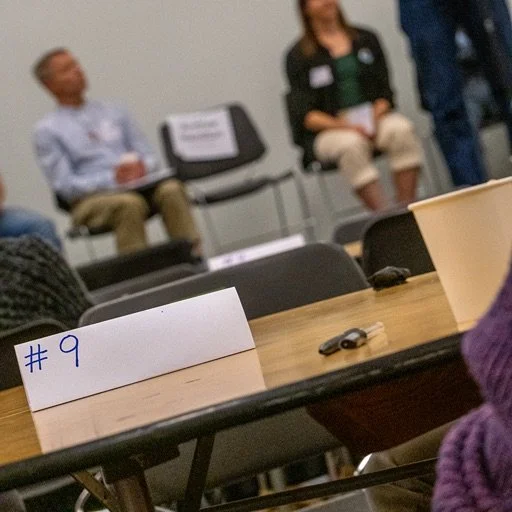
All right. Thank you to everyone for the part and that concludes part one. So part two, we're just gonna have to do a little shuffling around here. So each candidate will go to a table. the tables are numbered 1 through 18, but we only have 15 candidates. So anyone who's at tables 16, 17, and 18, I'd ask you to go there's a huge empty spot on table 1. So, maybe you guys migrate there, and then anyone else, join another table, that if you're in 16, 17, and 18, okay?
The other thing to note, at each table, there's a chair with painter's tape on it. Leave that open for the candidates to come and rotate into, so it just makes it easy so they have a seat. Yes, and then let's just wait till everyone shuffles around, then we'll let the candidates loose. Okay.
01:02:00.000 --> 01:02:04.000
Audience Member / Organizer:
Cowbell needed more cowbell.
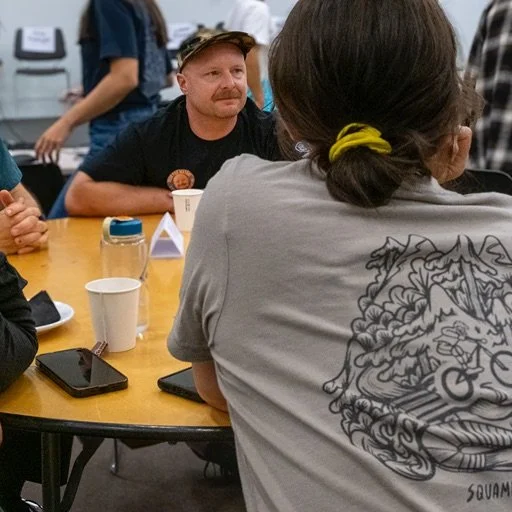
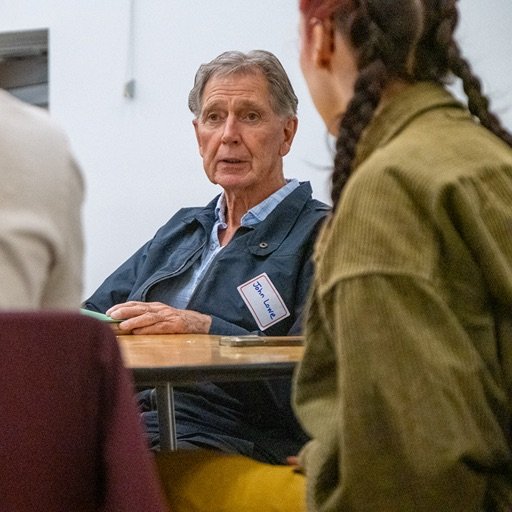
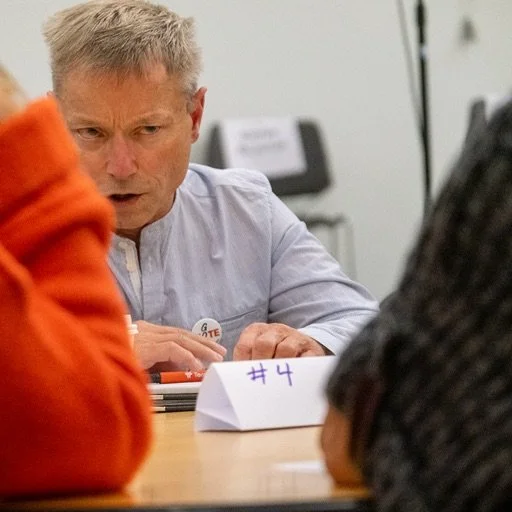
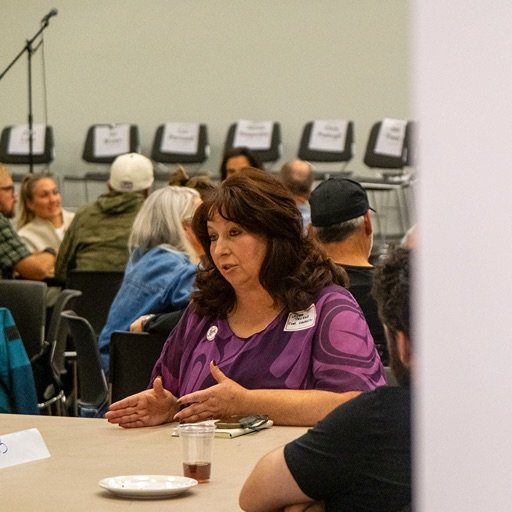
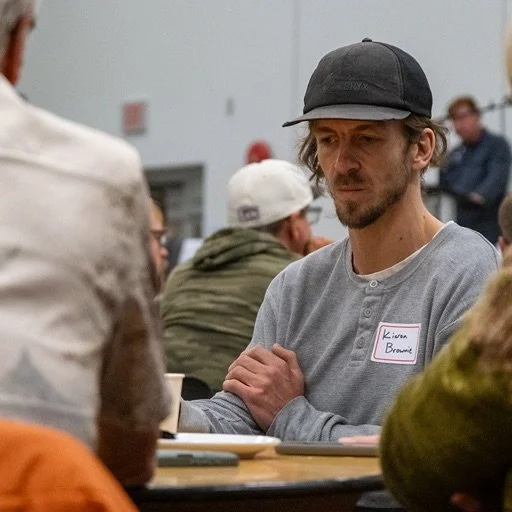
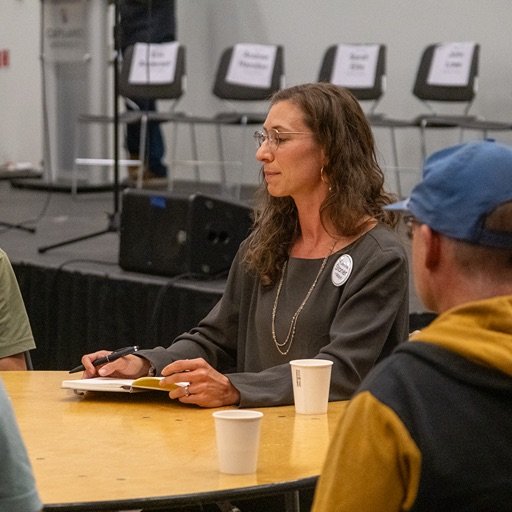
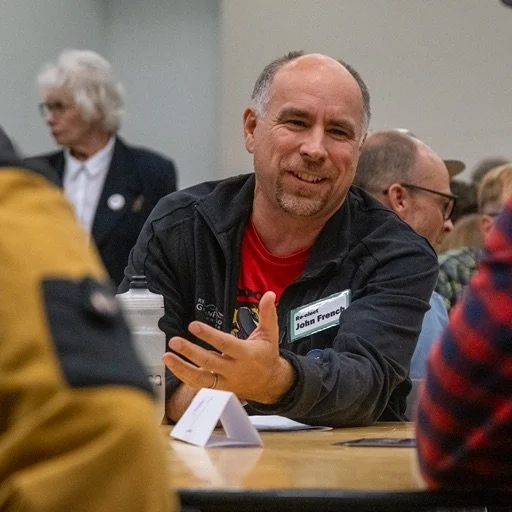
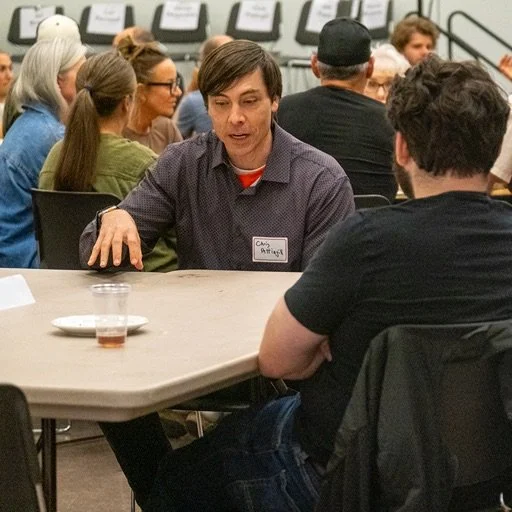
The candidates then completed a full-room rotation, spending time with each table group to answer small group questions.
-
Timestamps:
00:00 - Introduction and Land Acknowledgment (Brennan Williams, SORCA President)
04:18 - Facilitator Welcome & Meeting Format (Jeff Cooke)
06:40 - Jenna Stoner (Mayoral Candidate)
09:37 - Daniel Deal (Mayoral Candidate)
12:36 - Sean Easton (Mayoral Candidate)
16:39 - Eric Andersen (Council Candidate)
20:39 - Andrew Hamilton (Council Candidate)
23:23 - Sarah Ellis (Council Candidate)
27:00 - A. John Lowe (Council Candidate)
30:59 - Ian Brown (Council Candidate)
34:59 - Luc Perreault (Council Candidate)
38:47 - Janice DesJardins (Council Candidate)
43:08 - Chris Pettingill (Council Candidate)
46:54 - Kieran Brownie (Council Candidate)
50:05 - Laura Prosko (Council Candidate)
53:47 - Shaun Veltkamp (Council Candidate)
56:43 - John French (Council Candidate)
1:00:32 - Transition to Part Two Table Rotations (Jeff Cooke)
Learn more about candidate platforms and local election details through the District of Squamish election portal.
Squamish Chief articles:
Councillor candidates on their trail to—or from—Squamish outdoor recreation
Squamish mayoral candidates map out path for outdoor recreation
Photos by Scott Yan
